

Are you looking for the perfect way if how to really start a streaming service?
Not a problem at all..
Entertainment has to lead an incredible journey into the unknown world of enthralling experience.. It’s a never-ending chain of fictional or nonfictional narratives..
Making a streaming services with the rise of technology & internet, audiences love to enjoy & live through these narrations in the form of movies, songs, games, etc..
Studies indicate that the global video market is anticipated to expand its size vastly and upscale with a revenue of USD 184.27 Billion by the year 2027.
Netflix has evolved into the modern equivalent of renting a movie in the 1990s. This individualized entertainment consumption has come a long way. It’s not too late to know how to start a streaming business just like Netflix and other big giants like Disney +, Amazon Prime, and Apple TV+ and gain big success
Just like this quote indicates, “Netflix is something I watch – Famke Janssen”
We comes to know that there are several production houses and TV channels that are taking a glance at how to build a streaming service & create a strong presence in the market..
Moreover, it is dependent on launching its own set of services with all titles produced & distributed on its TV network.. And that’s how video streaming website is created to get a multibillion-dollar business worldwide which can be extremely profitable in forthcoming days..
Having said that, you need to have cumulative figures with facts that project their success in the streaming industry..
Table of Contents
Industry Growth Insights: How Popular Is Streaming Video?
For instance
Let’s take top streaming players just as Disney, Viacom, AT&T, and Netflix made up revenue of more than $6.15 Billion in 2020. Followingly in the second quarter of 2021, Netflix generated about total revenue of $7.3 Billion.
When we look into big streaming brands like NBC Universal, which is known as Peacock, WarnerMedia (HBO Max), Quibi who are on set to release their most expected streaming services with a prediction of $184 Billion by 2027.
And the best part for all businesses & content owners who are researching how much it costs to start a streaming service is that you can get the best news with these extraordinary stats from many sources…
Which would be..
The entertainment market to stream your curated content is estimated to sky high & sharply reach upto $ 2.6 trillion by 2023 & that’s simply unbelievable!
Let’s reveal some of its distinguished..
What Are The Different Types Of Streaming Services?
1. Streaming Video On Demand
This category falls under a crucial one since creating a streaming website & takes a glimpse of it with actual downloading video has a vast difference in between. You can watch a movie whenever you need strikes, and dots are joined for you in a tailormade manner.
In short, you’ll have both times as well as the opportunity that is required. Right now, the closest to correlate, Netflix, the leading streaming service, produces movies, and TV shows itself & is streamed around 190 countries around the world.
2. Video Live-Streaming / Broadcasting
The case with live video streaming is slightly different.. When a business stakeholder like you think of how to create a streaming app/websites like Netflix or any other online video platform, live videos are streamed.. Here you may catch it or miss it totally..
A prime example of it reminds us of Twitch which leads live gaming broadcast service. There are other popular niches as well.. Also, social platforms like Facebook, Instagram, or Tik Tok have real-time streaming characteristics & can be used whenever people like to showcase something.
3. TV Live-Streaming
TV live streaming is associated with setting cables to their homes. Since you are getting into how to make a streaming service more impactful, then let me tell you, it’s not the same as on-demand streaming.
Looking To Build Your Own Online Video Platform?
Start and Grow Your Video Streaming Service With 1000+ Features & 9+ Revenue Models.

 Highly Customizable
- Life Time Ownership
- Own 100% of Your Revenue
- Full-Branding Freedom
This genre is keenly used when one wants to keep abreast of news, and sports broadcasting.. There are a few examples like ESPN, and FuboTV, which may offer movies & TV series, but not in terms of on-demand availability.
4. Audio Streaming
The most popular services in the audio streaming platform set a clear way to provide streaming on demand. Some of them are Spotify, Apple Music, Youtube Music, etc. Mostly these are top providers in the industry other than Google Podcasts, Amazon Audible, Apple Podcasts & more.
Studies have shown that in the first quarter of 2021, Spotify held 32% of music streaming subscribers globally, which is almost double the profitability compared to Amazon Music subscribers. Others included Apple, Youtube, Tencent Music, etc.
Moving further.. Let’s take a look at
How to Start a Streaming Service: A 7-Step Guide
Starting a streaming service like Netflix is a complex and challenging process.
But here are some general steps to consider:
Step 1: Research and planning
Before starting a streaming service, it’s essential to research the market. Determine the type of content you want to offer, your target audience, and how you can differentiate your service from competitors.
Step 2: Develop a business plan
A budget plan should include a budget, revenue projections, and marketing strategies.
Step 3: Content acquisition
Acquiring content is crucial to starting a streaming service. So, negotiate licensing deals with content providers or create your own original content.
Step 4: Build the platform
You must build a OTT platform that hosts and streams your content. Consider partnering with a technology provider to develop your OTT platform. Or hire a team of developers to create the platform in-house. You can check VPlayed if you want to build a self-hosted OTT platform. This way, you can not only start a streaming service but also own the platform in its entirety.
Step 5: Choose a monetization model
You’ll now have to decide how to monetize your streaming service. For example, will you offer a subscription-based service or charge per view or download? You can choose a model from the list of 9+ monetization models offered by Vplayed.
Step 6: Launch and promote
Now that your platform is built and your content is acquired, it’s time to launch your streaming service. First, promote your streaming service on various channels. It includes social media, email marketing, and online advertising.
Recommended Reading
Step 7: Monitor and adjust
Keep track of your streaming service’s performance. And make adjustments as necessary. Update and improve your platform. Listen to feedback from your audience to ensure that you’re meeting their needs.
How to Get Started Streaming Services with VPlayed?
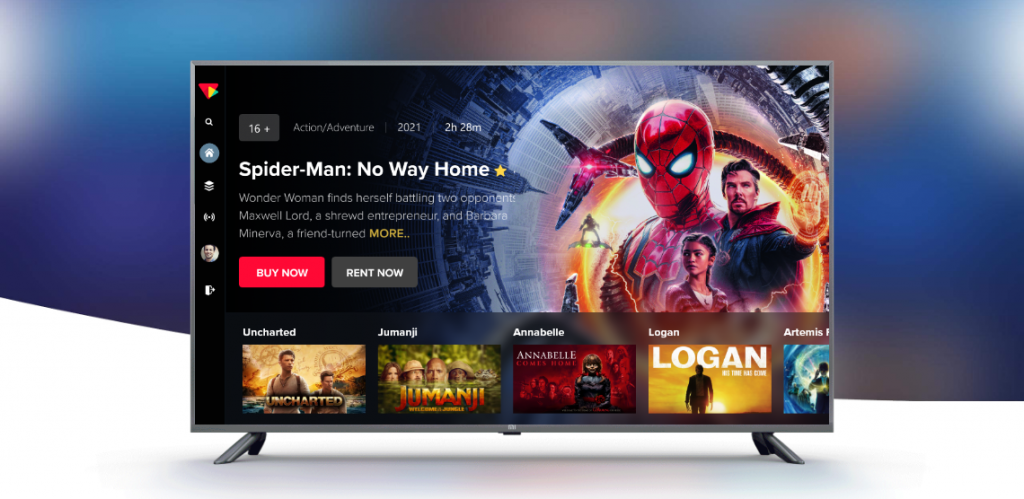
VPlayed is an all-in-one streaming solution that helps content owners, and broadcasters monetize their valuable content across all devices worldwide effortlessly. So, one can know how to make a streaming website with any niche that they choose.. Some of its best video streaming platforms features are:
1. Customization
You can easily customize your platform according to bespoke business requirements completely and gain the best means of profitability
2. Lifetime Ownership
When you are searching for the right means of how much it costs to build a streaming website, you can put your worries by getting lifetime ownership all at once from VPlayed
3. 3rd Party Integration
If you have any plans to extract other ways of best revenue, then 3rd party integration can be your best choice. You can utilize it using an advanced collection of tech stacks
4. White Label Platform
Get the best white-label OTT streaming platforms that you can own forever by white-labeling your services all under one umbrella
5. Multiple Content Delivery Network
Create stable connectivity and prevent your video servers to overload & speeding the content delivery across worldwide geographical locations
6. Security
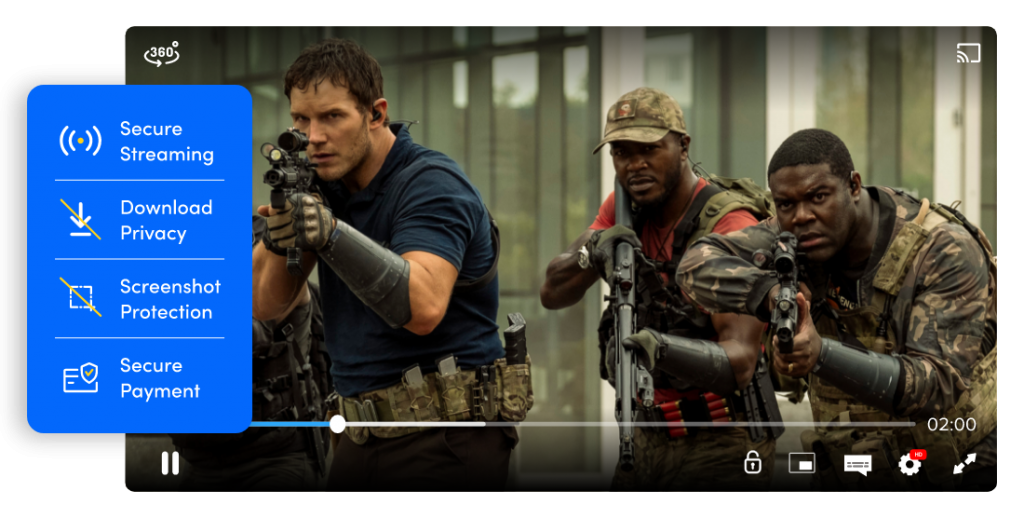
Protect your content from any sort of unwanted intrusions from varied sources on the internet. Enable video multi-DRM for complete end-to-end encryption for content infringement & data theft.
7. On Premise/ On Cloud Hosting
You can now stream videos through your own servers or through our secure cloud servers. The choice of platform integration is totally yours now.
8. Transcoding
Now you may choose an OTT app development to streaming your films on any operating system or media player, with a variety of codecs, such as MPEG-2, AV1, H.264, and others.
9. Cross-platform Support
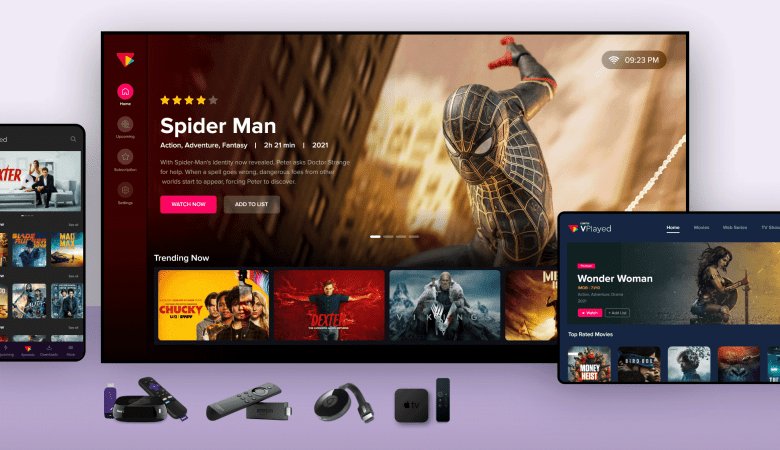
When you need to diversify your platform’s availability across all devices, cross-platform support via multi-device compatibility elevates your brand’s vicinity.
10. Video CMS
An in-built video content management system will help you to assemble content in a centralized manner, all under a single roof. Now to, creating, stream & manage your assets in an organized way is turned simple.
11. HLS Video Player
Video distribution is no more a concern for you since creating a video streaming app or website with HQ videos is made cohesive. Elevate your content with Buffer-free streams easily.
12. Analytics
If you are searching for how to create a streaming website it is crucial to know about analytical features to track revenue generation. Improve your engagement rates with detailed metrics.
How Much Does It Cost To Start A Streaming Service?
After you decide on how to start a streaming service, it’s required to know its cost to create one, right? When you kickstart that journey definitely, a lot of time & financial resources come into major play.. Certainly, every business idea needs to resonate with the cost factor.. And that would entirely depend on more features you add, customization, & lots more to consider..
With that, you can inclusively take in the development process that can also involve in creation of different apps for end-users & back-end admins.. All of this, together, will help you count on validating estimation & entrepreneurial growth.
In A Nutshell
We understand what it takes to create a streaming service similar to Netflix in an innovative way. Despite its increased popularity, you can have expert guidance & assistance in developing one lucrative business idea. Hence, planning with market-driven products or services is now in much need in order to save your precious time & money.
If You Already Have An Idea To Start A Video Streaming Business, Schedule A Free Demo, And We’ll Get You On The Road To Video Streaming Success

Frequently Asked Questions (FAQ):
As we can see, the spike of success achieved by Netflix, HBO, Hulu, or any other service, is highly inspiring. Looking at the results of their strategies put in, many businesses have started to consider monetizing many of their creative work just like Netflix which estimates a market size of over 42 Billion as per the statistics. There are a lot of beneficial factors that you could think of in this decision which stands for itself to make such a service today.
When we get to know how to start a streaming service it is essential to know that streaming refers to the technology of transmitting audio or video files. It is initiated by distributing them in a continuous flow with the help of a wireless internet connection. Media files are prearranged and transmitted in a sequential collection of data so that, they can be streamed instantaneously without any buffers or delayed latency.
It surely depends on the number of customization that is needed for every individual business to grow. Some of them depend on various factors such as platform deployment: whether it’s needed to be on cloud or on-premise, mobile OTT TV app development at various compatibility mode, whitelabelling facility, and many others in the line.
While you checkout how to create a streaming service like netflix, take a look at some of the prime factors that initially you can leverage on. Decide on the right strategy to start Netflix-like app, then it comes to prepping with your business-kind model. After that, comes with the usage of essential tech stack which can support in creation of streaming service, add significant features, & consider all important requirements to shape it in accordance to your business needs.
It entirely depends on how you plan to build a streaming service with resourceful means of monetization. Any video platform is well performed using lucrative monetization models in which a subscription model, AVOD, or even pay-per-view model can be useful to make big money. These variable plans can benefit your viewers, along with free trial versions that you can offer for a month. Or either you can propose to subscribers with new content to unlock with in-app purchases. This way, you can grow app revenue too.



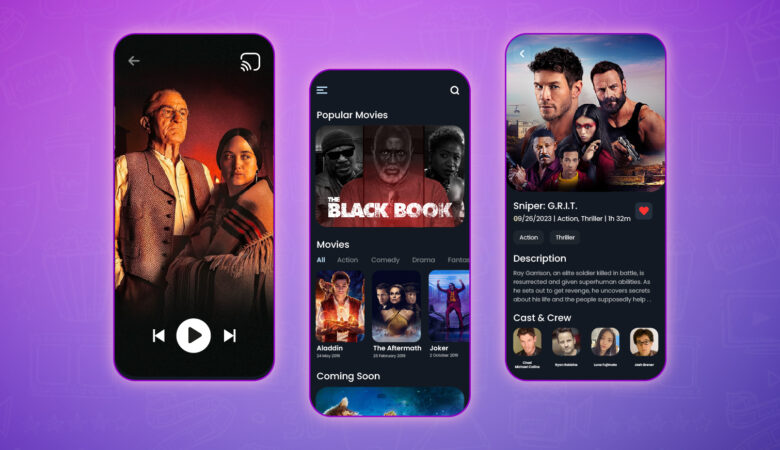
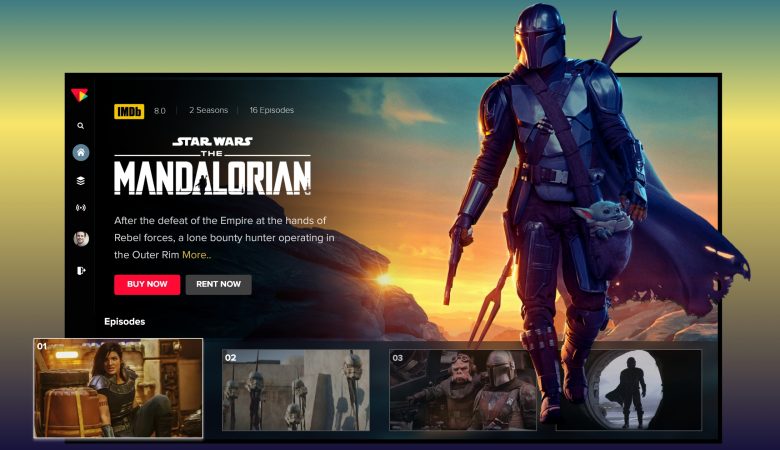


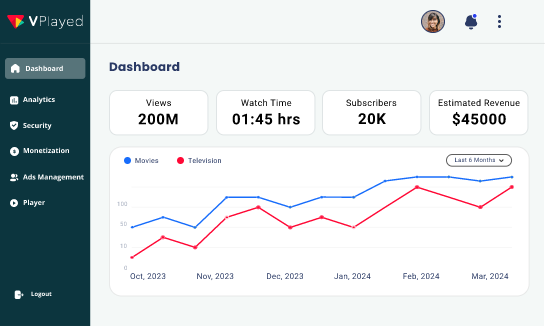


Hello, I would like to know how to create a streaming service like Netflix. I promise to make a very good movie streaming website like Netflix, Hulu and to get a good amount of people watching on my movie website. What will be the cost to build streaming service?
Hi Team, kindly share the prices for building my own streaming service, we will be building platforms like Hulu or Netflix, most of the distribution will be in Pakistan and nearby countries.
Hello Team, I’m trying to create a streaming service like Netflix to help deliver video content. Please inform me on pricing options. Thanks!
Hello. We are looking to create a video streaming service that can be white labeled. We are trying to set up a platform that has features similar to Netflix and Amazon Prime and live broadcast capabilities for streaming live events. We will need a platform that supports various monetization methods. We came across Vplayed and want to know more details about it including pricing. Could you help?
Good day, I want to create a streaming service like Netflix in nature (but of course smaller to start) eventually I’d like to add the capability to watch with friends maybe a side by side view movie on one side chat window or later video window on the other.
Hi, I’d like to develop a streaming service and live streaming platform that is a hybrid between YouTube and Netflix. In short, it must enable users to create a profile and upload their own UGC which they can monetize via PPV or subscription model. Can your platform enable this? Is it fully customizable?
Hello, I need a platform that can host the mainstream streaming service like Netflix and Disney plus. It also needs a way for users to upload and monetize content. I should be able showcase user content next to mainstream apps. We need an App Store. There needs to be a floating menu overlay that can be accessed on any page for notifications, messaging audio/video chat, on the admin side I need to be able to customize and add and remove content. I want to add more options. Can we discuss about this?
Hi, We are going to start my own streaming service (hopefully with you !!) that could be considered a sort of Netflix of Psychology with contents related to wellbeing, stress management, cognitive empowerment, memory training, … we are already building about 1000 contents among with video, audio, text on the screen, … in particular we are creating a lot of 360 degree contents at 8k resolution (downgradable). We considered Vimeo and several other platforms, but we would like to understand your offer on a monthly/annual base. Please let me know and let’s talk by email, but I am also available for a call 😉
Looking to build a streaming service similar to Netflix but with a very different content base. I tried building on most popular video streaming websites and find it not only difficult to navigate/setup, but also the layout and functionality are subpar. Would love to know how you compare and the cost to build video streaming website.
Hi, We are interested in a demo regarding ad insertion & we would like to know how to create a streaming service like netflix. Few questions: How many viewers do we need to meet the eligibility requirements? What’s the payout split What’s the payment frequency to KNG?
Hi there, I’m interested in how to make a streaming service that is white labeled for sports event production with monthly subscription.
Hi, I want to know how to start a streaming service like netflix with my wireless plans that will add value to the my flagship unlimited plan.
Hello, I would like to know the pricing around installing and hosting the OTT streaming. I would like to know how much does it cost to create a streaming service?
Good day, how to start my own streaming service, that will allow our audience to view our services in a professional manner. We have a Roland VR-4HD Video Switcher and a Midas digital mixer with 1080p cameras. Please let us know what options are available for online church broadcasting via YouTube. We welcome a representative to have a conversation with our team.
Hi, we currently have a streaming service that we provide VOD dance videos, but it’s killing us with the prices since we aren’t selling as much as we’d like at the moment. However, we don’t want to get rid of all our online content that we took so long to create. So we want to find a new home for the 100 hours of dance video classes we have. Can you please tell me your pricing and if you would be able to help us migrate? Thank you!
Hello, We are planning to launch a streaming service, to offer live international TV channels, classified by countries, to users using Android Box, Mobile Apps and Smart TV Apps
Hi, We are looking to start a streaming service with over 500 titles in the arts and are interested in finding out more about you. Because we are at the stage of building apps for TV and we want to understand more about applications like yours whether it can be easy to integrate service prices and what applications for TV we can work through you. Our site our phone apps are developing specifically for us with a separate back end.
Hello I’m looking to launch a streaming service dedicated to kids learning. What do you packages start at and what do I get?
HI, need to connect two existing apps to streaming provider i need to create at least 4 more apps and connect streaming provider we currently broadcast live television nationally to fit direct tv and looking for american based customer service.
Hello, we are searching for a platform to build our streaming service. Short videos (15-30min). Please let us know whether you need more details at this stage. Thanks
Hi, I want to build my own streaming service like Netflix. I have a digital library though that I would like to grant access to members so that they can watch content. I will also be adding each week new content in the form of interviews for people to view. How much does your service cost and how can I grant access to only registered members from my database? Finally, in the event that I want to have a live stream of an event, can we stream from the channel directly? Right now I have a subscription on and simply add the iframe into Inplayer and it streams directly. Please let me know what you think is the best for us? Thanks
Dear , I hope you’re well. We are a film and television production company and we thought that it would be highly beneficial and an overall great idea if we had to start your own streaming service/on demand platform for our own content as well as content from various other sources. I was wondering if you could please tell me more information about what our various options are, how it all works, the price/cost structure to your software/platform and what the next steps are? Would the “White Label” platform be easier/cost-effective? Would we start our platform with content already attached? Any help would be gratefully appreciated. Thank you so much. Best Regards.
Hello, I work with a company called Elevation Corporate Health and we are working on improving our online presence for our clients. One element of this is to improve our workout to make a streaming service . I’d love to see what VPlayed has to offer and if it would be a good fit. Thank you,
Hi my goal is to create a streaming platform so I add a wide range of media and some selected shows that are not available on the platform, how to create a streaming service such as netflix that I can be in control of what content is shown on the platform content like Netflix, Hbo, Hbomax, Amazon etc I plan to add to the platform I like the payment system Netflix has like coarse i not sure I have rights to ask a fee for my platform as im just distributing a bunch of other platforms content. I also like the idea of an app for tv and phone.I am unsure if i will eventually produce original content. But my idea is to create an all in one place where customers can have access to a number of shows from multiple production platforms. The reason why I want to do this is I don’t like the idea of being reliant on harddrive and I love the idea of online global service. I do not have permissions/right for content and would like to know where to request for that. I have offline copies of content.
Hello, I would like to Start my own streaming service with my fanbase of 1 million. I’m looking to have ads and video ads playing before each song streams.
Hi, looking for a streaming service provider to integrate live boxing matches into our mobile app.
Hello – I would like to speak with a rep to discuss utilizing your company’s services and how to start a streaming service. Please let me know if we can set up a call for this week. Thank you!
Hello, I am in the process of starting a streaming service like Netflix and heard about your service, I will like to know more about your range of services and how it can benefit or aid my project. Here is something I have just started with, it is not yet public though. I will appreciate your response on this.
Hello, I had an idea on how to make a streaming service that only showcases movies that are picked by my members and myself. Members will have an active role in deciding what movies will make the website/app with a comments section for each movie played. Starting off my niche would be horror movies with some syfy sprinkled in. I am looking for the best product or something within my zero budget to be the vehicle of my idea. Please contact me via email or text at first because I do not usually answer my phone.
Hi, I’m interested and getting some information on how to start a streaming service or having something that I can integrate with my website.
Hello my name is Robin Castillo
I’m looking to see the price for how to create a streaming service, andriod and iphone app
Hi, I have plans to create a streaming service that would combine ppv subscriptions and monetization.
Hi there! Im looking to create your own streaming service with all features a standard video streaming website will have, watchlist, user profile and others. There are other details that im unable to write up all please get in touch so i can just explain it more better and also get to ask my questions
Hello I’m looking for a platform that’ll allow me to start streaming service, can you help?
I’m interested in starting a streaming service like netflix, prime and where do i need to start? Creating my own movies and tv shows streaming service like Netflix and Hulu
Hey! We are a start-up and want to launch a streaming service like Netflix. We want a subscription-based system with the special feature, that the users can decide themselves which movie they want to give part of their subscription money to.
Hello I’d like a demo and I’d also like to understand how much does it cost to start a streaming service to be created for me. Also how can your apps safeguard artist work from streaming farms ?
Hi, I would like to find out the cost to build a streaming service like Netflix for contractors to share videos
Hi, I was wondering if you had the capability to use your service as a multi-live streaming service. Could I make a streaming service for them to live stream from accounts. They can all stream on their own created account and monetize from their stream?
Hello. We are setting up a streaming service and we’re interested in your services. We are starting with a small user database and about 50 videos in three languages. We are interested in a service that would prevent multiple logins, so that user credentials cannot be simply shared – maybe linked to Google accounts. Please let us know about your features and prices. Best regards, Luka Juri
Hello team, I own a Media and Publishing company and want to build a streaming service. Very serious.
Looking to build a streaming service similar to Netflix but with a very different content base. I tried building on VIMEO OTT and find it not only difficult to navigate/setup, but also the layout and functionality subpar. Would love to know how you compare.
We are a small start-up planning to start a streaming service for amateur sports in Bulgaria, I am searching for an affordable streaming platform and I need more details about vplayed – features, pricing details, and more.
Hi, We have a company, ISP, a video production company that makes low-budget movies for Haitian people, and recently we have created one film that will be live in the next few days on our platform. We don’t want anyone to download or copy our movie. Based on my research, I found out DRM can be helpful because it provides start a streaming service. Is there anything you can do?
I’d like to know how much does it cost to start a streaming service. I’m looking to start a streaming service similar to Netflix.